
William Aaron Stalling
Rank: Corporal
Service Number: 185
Unit: 36th Battalion
Date of Death: 12 October 1917
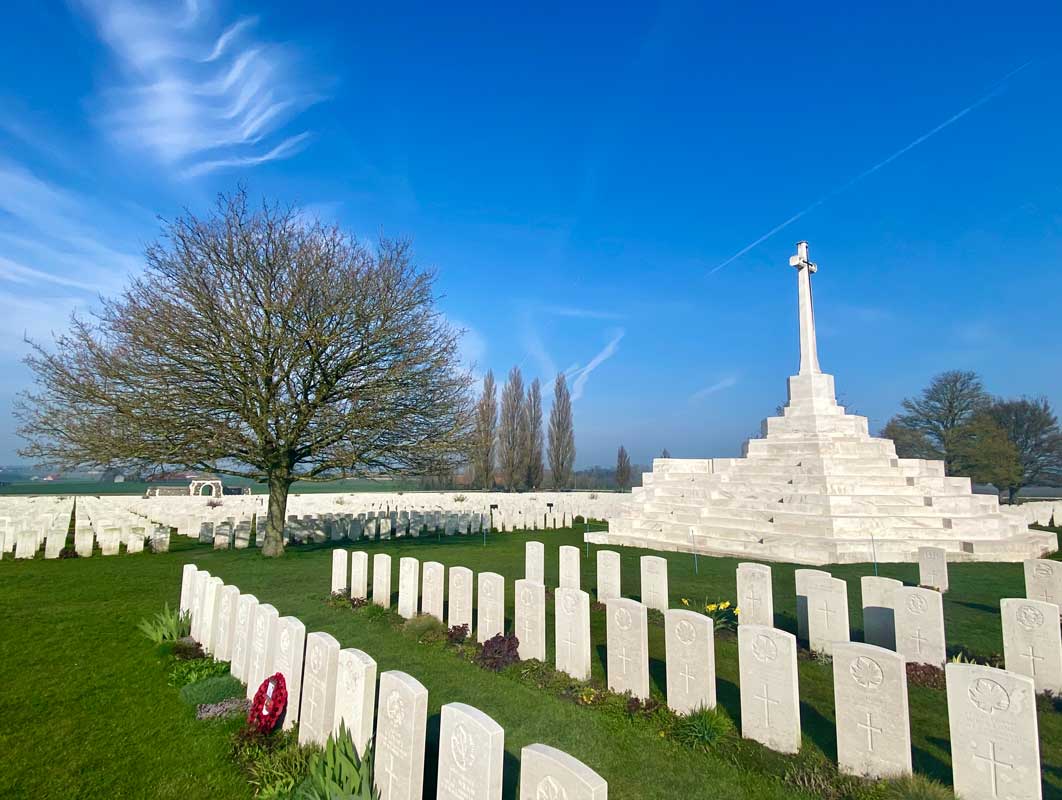
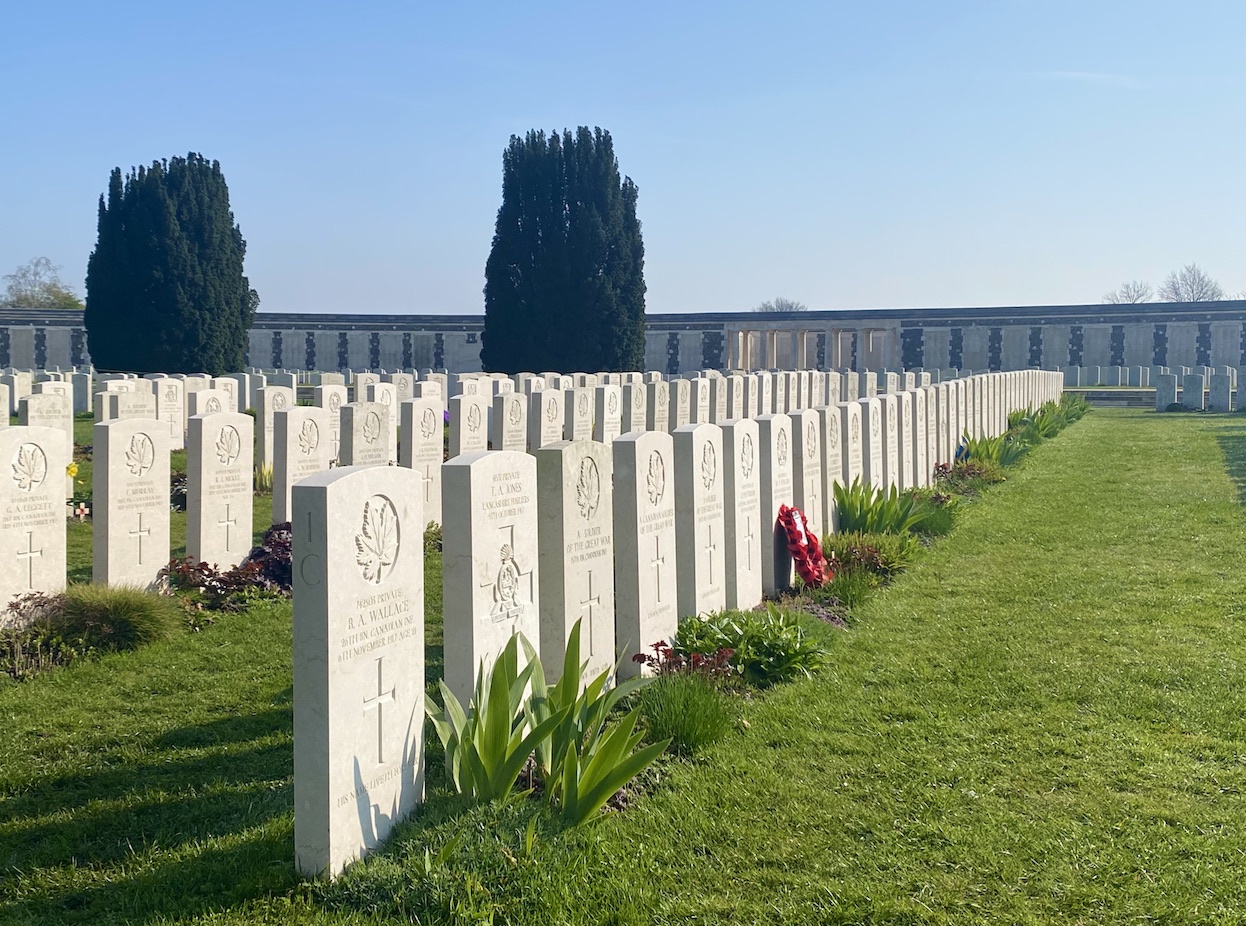
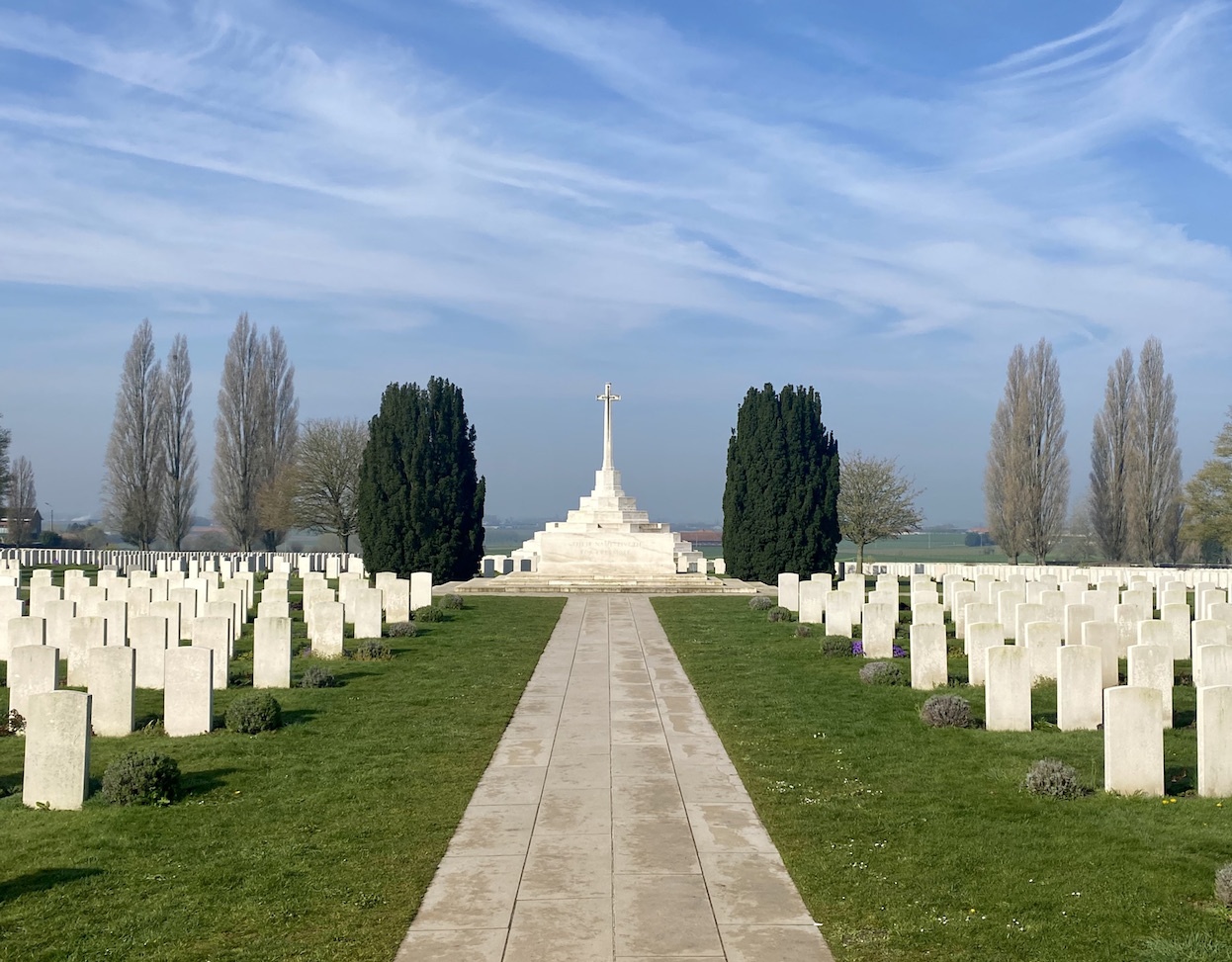
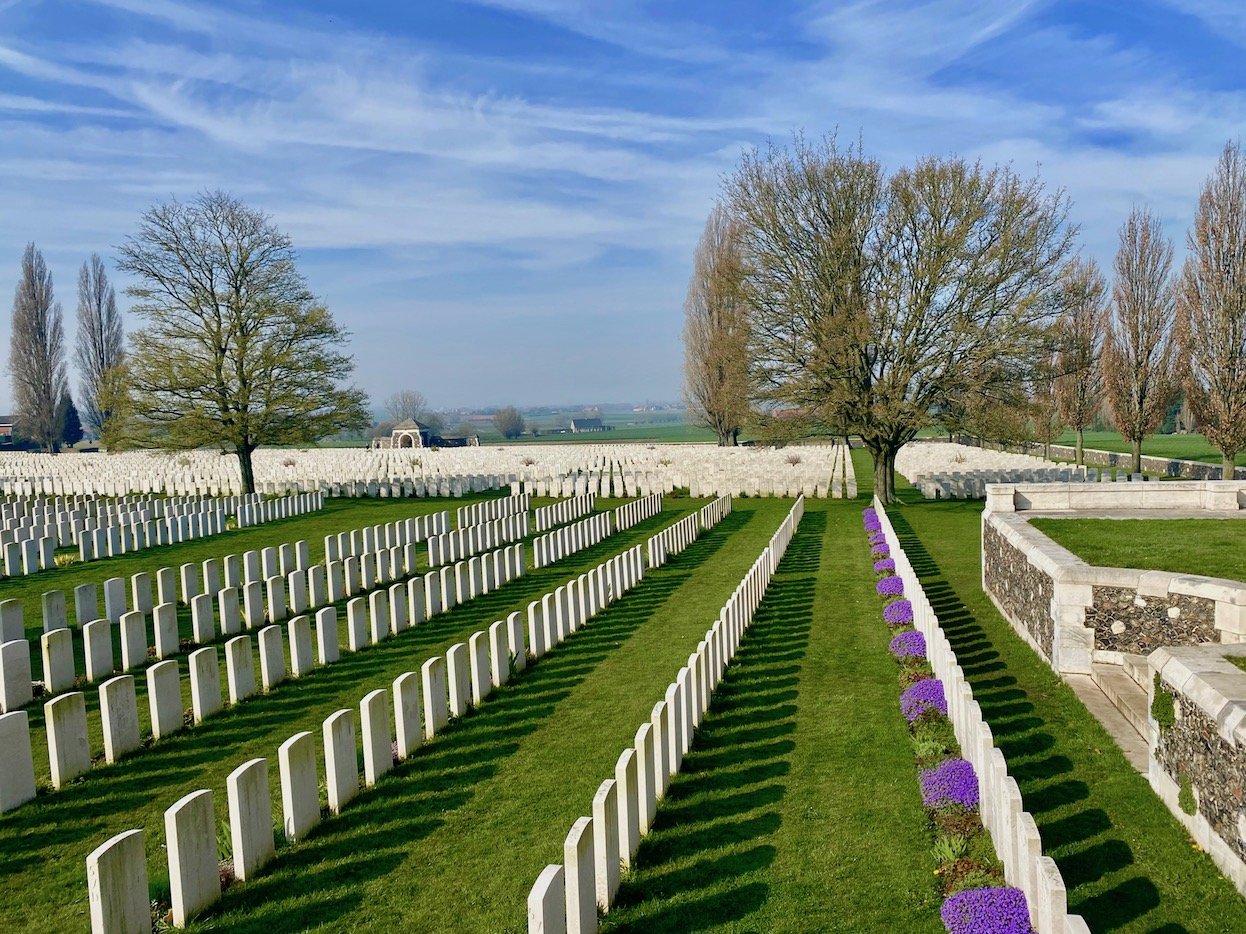
Cemetery: Tyne Cot Cemetery, Belgium
When Corporal William Stalling was killed in action in October 1917, he became one of four pairs of brothers from the Stanthorpe and Amosfield communities to lose their lives during World War I. William’s brother, Private Edwin Stalling had died of wounds sustained at Messines just three months earlier. Their deaths followed those of three other pairs of brothers from the district: Arthur and Edwin Hindmarsh, Charles and Lionel Lee, and Alfred and Walter Potts. The impact of these losses upon their families cannot be imagined. The collective grief experienced by the local communities was further compounded when William became one of eight men from the adjoining districts to lose their lives within a fortnight during the Battle of Passchendaele.

According to research undertaken by John Stalling, of Tenterfield, William (Will) Aaron Stalling was born in February 1897, the seventh child of Frederick and Elizabeth Stalling. Like his brother Edwin, Will grew up on the Cemetery Creek tin mines and attended the Amosfield Public School. Will played tuba in the Amosfield Brass Band and was employed in the timber industry at Mallanganee, N.S.W.
At the age of 25 years and one month, William undertook his medical at Tenterfield on 31 January 1916.
Together with his older brother Robert, William joined A Company of the 36th Battalion at Liverpool on 2 February 1916. The 36th Battalion became known as Carmichael’s Thousand Riflemen. Robert was soon discharged on medical grounds but William embarked overseas on active service on 15 May aboard HMAT Beltana from Sydney. He disembarked in Devonport, England, on 9 August and following further training he sailed from Southampton to join the fighting on the Western Front on 22 November.
On 4 December, the 36th Battalion began moving from its billets in Armentieres into the front line at the Railway Crossing, Nouvel Houplines. Over the harsh winter of 1916-17 the battalion moved between the front line and reserve positions in this area. The conditions facing William in January 1917 were harrowing:
Hostile artillery action was severe and targeted the communication trenches. Heavy snow was falling and temperatures were plummeting to a minimum of 15 degrees Fahrenheit (-9.5C) overnight. The men had to contend not only with the severity of the winter but also from the depredations of the rats. These vermin were everywhere and would even eat through equipment to get to the men’s iron rations (Clark 2014, 81).
On 26 May William was admitted to the 9th Australian Field Ambulance with a sprained ankle. He rejoined his battalion two days later.
The 36th Battalion fought in the Battle of Messines between 6-9 June. The battle was deemed a success but came at a heavy cost for the 36th Battalion. The battalion lost 48 men killed in action and the lists of wounded filled many pages of the Battalion’s War Diary (Clark 2014, 123).
William’s service record reveals he was promoted to Lance Corporal on 12 June and on 14 September he was promoted to Corporal.
In early October, he prepared to join the fighting at Ypres, Belgium:
The men of the 36th Battalion now moved inexorably closer to the bloodbath that was forever associated with the village of Passchendaele. They moved into a land that had been transformed into a place of devastation, shell-holes full of putrid water, tracks of mud hastily covered in duckboards to give some traction and the dead and wounded still lying pitifully on the ground. (Clark 2014, 166).
On 12 October the 36 Battalion, as part of the 9th Brigade, joined the attack on the Passchendaele Ridge. Fighting through the rain and mud and in the face of unwieldy machine gun and trench mortar fire, the attack by the 9th Brigade floundered. The Brigade lost 49 officers and 915 other ranks in the carnage that day. William Stalling was one of these casualties.
Corporal William Stalling, aged 26, was killed in action on the morning of 12 October, during the 36th Battalion’s attack on the slopes of the Passchendaele Ridge. His elder brother, Private Edwin Stalling, aged 30, had been wounded in action at Messines on 30 June 1917 and died of his wounds the following day. The Stalling brothers were one of four pairs of brothers from the Stanthorpe and Liston communities to lose their lives a consequence of World War I.
Private Arthur Hindmarsh, aged 21, was killed in action at the Battle of Messines on 10 June 1917. His brother, Private Edwin Hindmarsh, aged 32, had lost his life in the Battle of Bullecourt two months earlier.
Lieutenant Colonel Charles Lee, aged 44, died in Tenterfield on 5 November 1918 from the effects of his war service. His brother, Sergeant Lionel Lee, aged 26, died of typhus in Egypt on 5 April 1919, while waiting to return to Australia.
Private Walter Potts, aged 25, was killed in action on 19 August 1917 while his battalion prepared for the Battle of Passchendaele. His brother, Private Alfred Potts, aged 28, was killed in action during the Battle of Passchendaele on 12 October 1917, the same day as William Stalling.
Further details of Corporal William Stalling’s death are provided in his Red Cross File:
1693 Sergeant Arthur Smith, of Sydney stated:
I knew Stalling he was in A. Company, 3rd Platoon with me. It happened at Passchendaele on 12.10.17 and I saw him as I walked back wounded. Private Chigwidden had helped to carry him out, and told me Stalling had died on the way out.
2089 Private George Jones, of Newcastle gave his account:
They hopped over early in the morning, and just as they were going over, Stalling was killed outright by a shell. Informant was about 10 yards away, and saw Stalling fall, but could not wait to investigate, as he had to keep going in the advance. He never saw Stalling again, neither did he hear where he was buried.
W.Williams told the Red Cross:
We attacked at 6am and about 1/4 hour later Stalling was hit by a shell. He was killed immediately. I saw him after he was killed, but I do not know where he was buried.

In her book, Carmichael’s 1000, Margaret Clark wrote:
On this day of battle not only the 3rd Division but also the New Zealand Division suffered unbelievable casualties. The 36th came out of battle with only five unwounded officers and 147 men, the rest lay dead, dying or wounded on the battlefield.
The 3rd Australian Division suffered 3,199 casualties and the 4th Australian Division 1,108 casualties at Passchendaele on 12 October.
The New Zealand Division lost 2800 men, which made 12 October the costliest day in New Zealand military history. (Pedersen 2012, 271)
The service record of Corporal William Stalling contains a report dated 15 November 1917 that he was buried by Reverend F.G. Sherring in Tyne Cot Cemetery at Passchendaele.
The epitaph on William’s headstone reads:
GREATER LOVE HATH NO MAN
HE GAVE HIS LIFE
FOR HIS FRIENDS
Frederick Augustus Stalling, William’s eldest brother, and next of kin, received William’s war medals, memorial scroll, and memorial plaque.
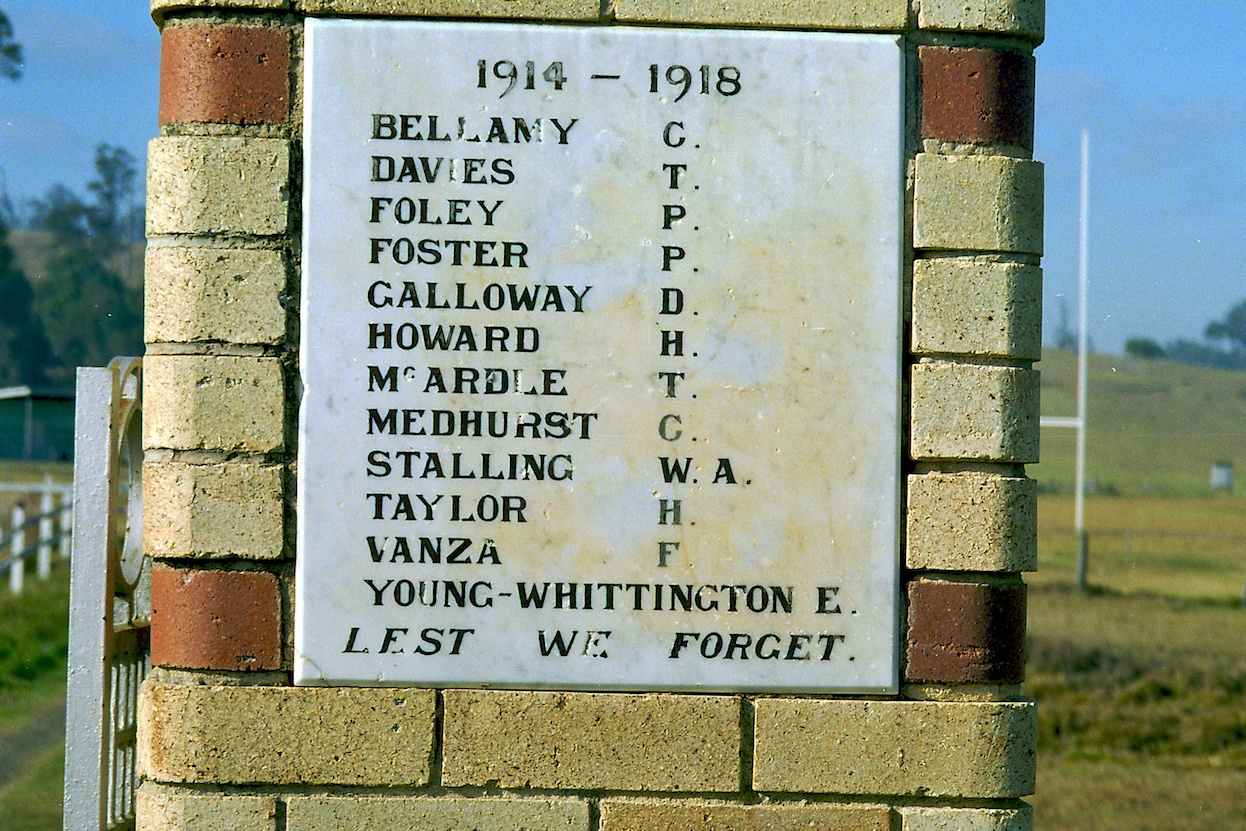
William is remembered with honour on both the Amosfield-Liston and Mallanganee war memorials.
References
Clark, M.A. (2014). Carmichael’s 1000. A History of 36th Battalion, AIF, 1916-1918. Their Triumphs and Their Trials. 1st Edition. Loftus. Australian Military History Publications.
Pedersen, P. (2012) ANZACS on the Western Front. The Australian War Memorial Battlefield Guide. 1st Edition. Melbourne. John Wiley & Sons.
Photographs
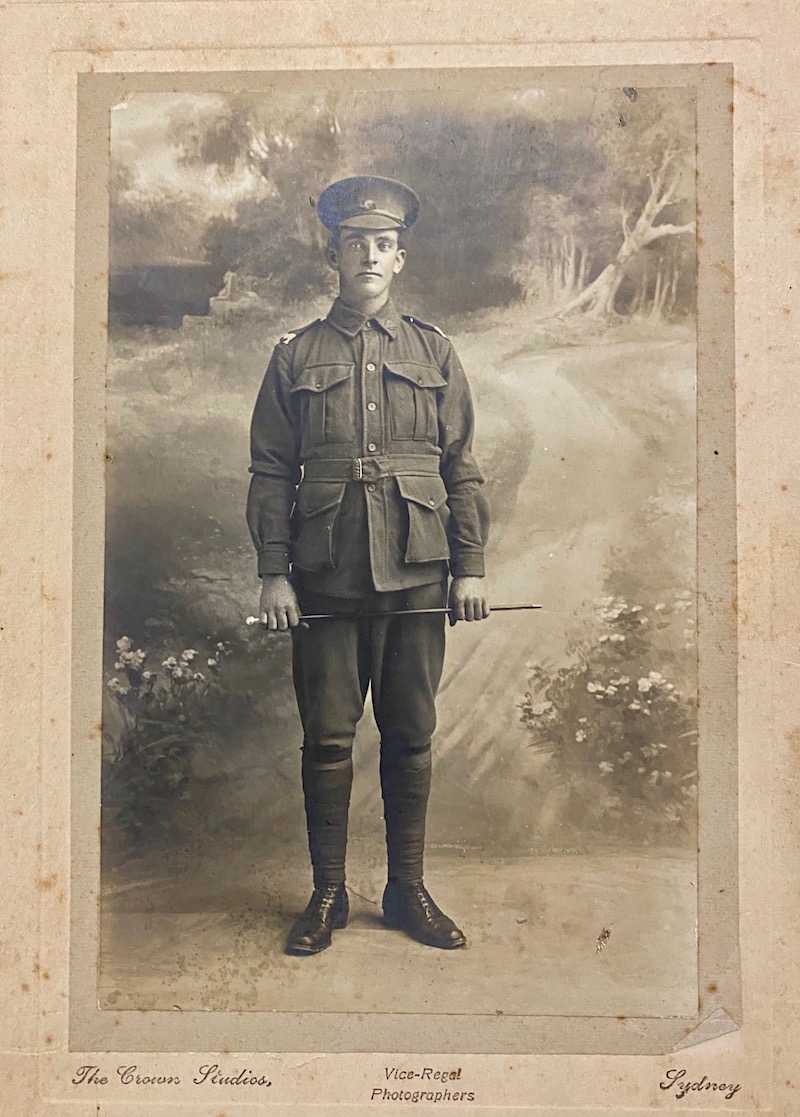
185 Corporal William Stalling. Courtesy of John Stalling.
Australian War Memorial Collection. P05301.280. Studio portrait of 185 Pte (later Cpl) William Aaron Stalling, 36th Battalion, of Tenterfield, NSW.
185 Corporal William Aaron Stalling. Courtesy of John Stalling.
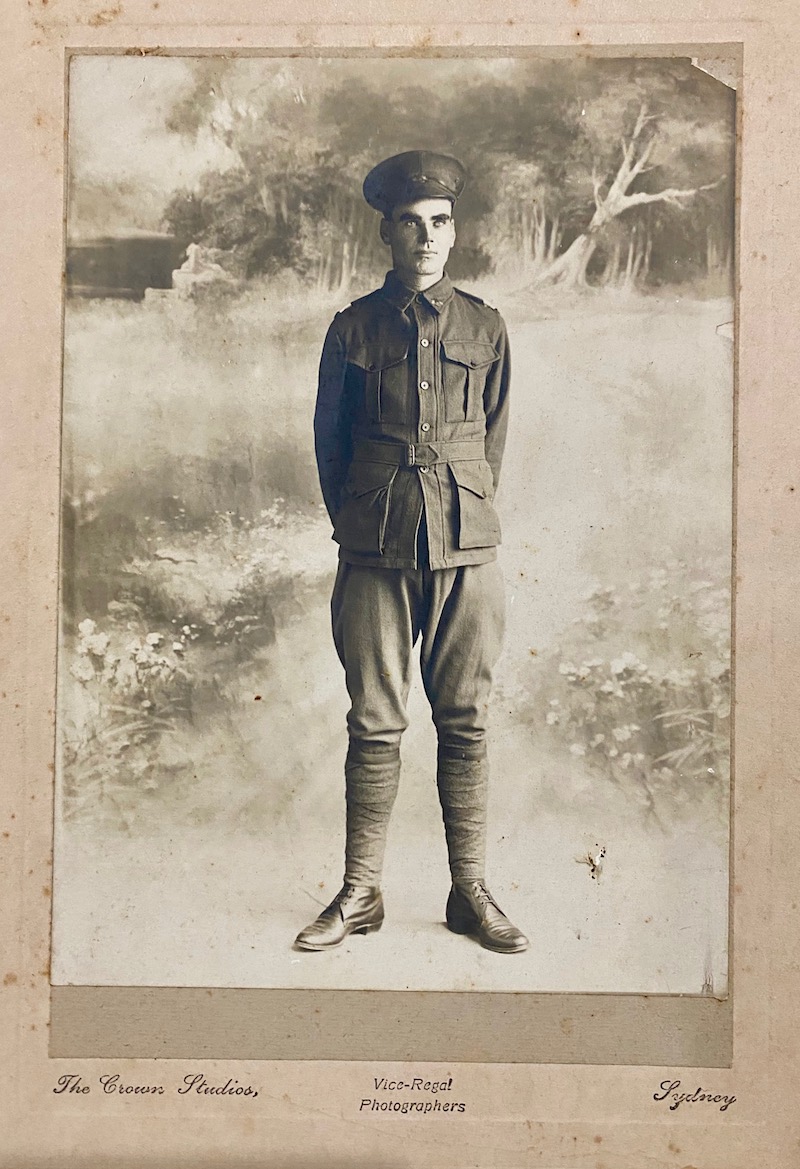
184 Private Robert John Stalling. Courtesy of John Stalling.
Mallanganee War Memorial. N.S.W. Courtesy of John Stalling.
Tyne Cot Cemetery, Passchendaele, Belgium.